8 hr
Rio Celeste Hiking Adventure from La Fortuna
- Expert local guide
- Small group
- Skip-the-line access
- Free cancellation
Rio Celeste Waterfall — Guided Hikes & Tubing Adventures
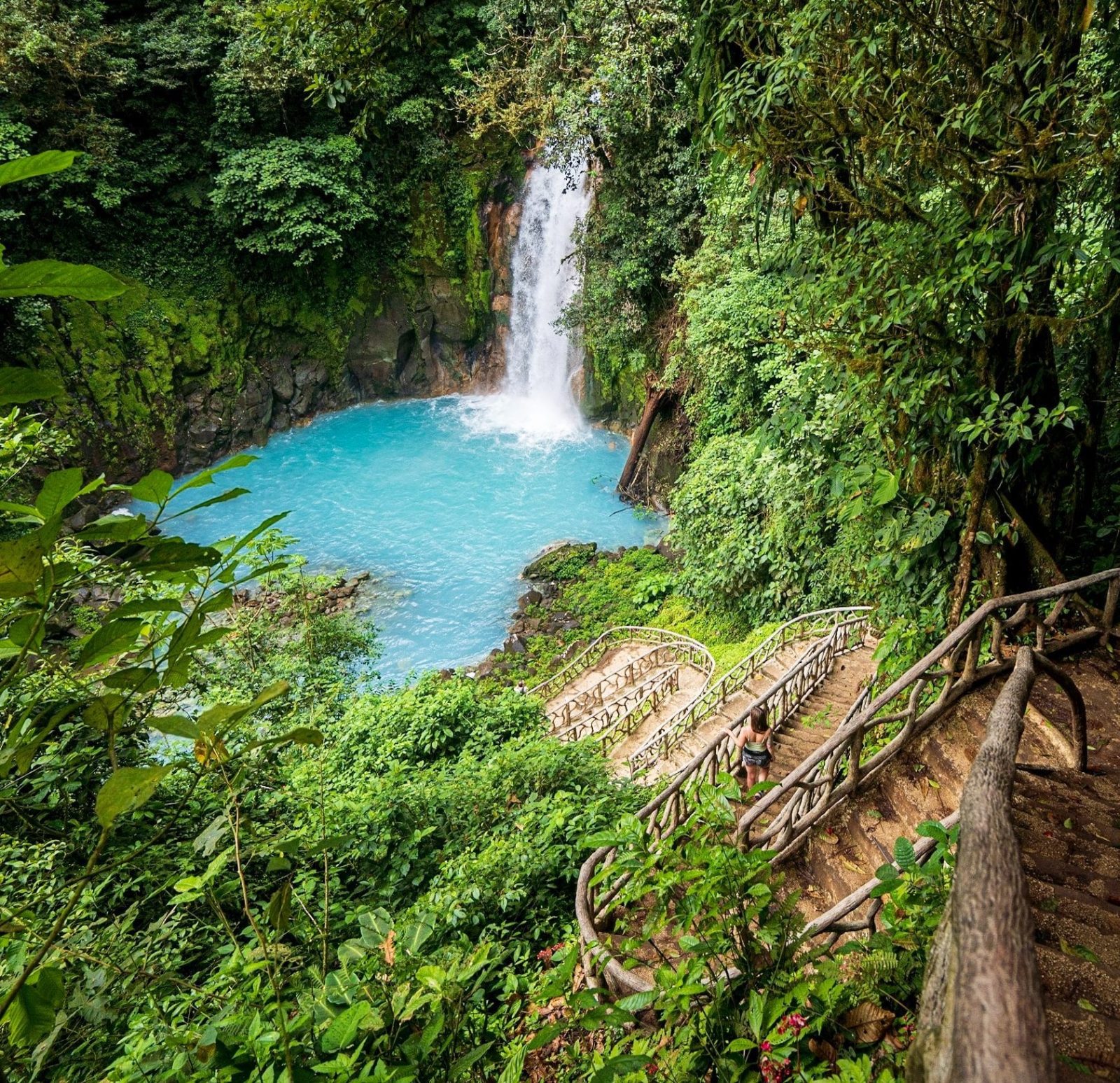
Volcanic mineral magic turns the river sky-blue, 254 steps down
Compare fares, pick the fit — all bookings are mobile-voucher and eligible for free cancellation where shown.
8 hr
3 hr
5 hr
| Experience | From | Duration | Rating | Guide | Small group | Free cancel. | Price | |
|---|---|---|---|---|---|---|---|---|
|
Guided Experience
Most popular
Rio Celeste Hiking Adventure from La Fortuna
|
La Fortuna | 8 hr | ★ 4.7 | ✓ | ✓ | ✓ | $89 | Book → |
|
Standard Entry
Tenorio National Park & Rio Celeste Waterfall Entry
|
— | 3 hr | ★ 4.1 | — | — | ✓ | $32 | Book → |
|
Standard Entry
Río Celeste Tubing Adventure with Natural Pools
|
— | 5 hr | ★ 5.0 | ✓ | ✓ | ✓ | $48 | Book → |
Worth it for nature lovers seeking unique geology
The $12 USD conservation fee for Tenorio Volcano National Park delivers access to one of Costa Rica's most distinctive natural phenomena—the celestial blue waters created by volcanic minerals mixing in the Río Celeste. The trail descends 254 steps to the waterfall overlook, then continues through primary rainforest past the Teñideros (where two clear rivers merge to form the signature turquoise color) and natural hot springs. For perspective, guided rio celeste waterfall tickets tours from La Fortuna typically bundle the entrance fee with transportation and run $75-95, making the independent park entry excellent value if you have your own vehicle. The experience itself is condensed—most visitors complete the 3.7-mile loop in 2-3 hours—but the volcanic phenomenon you're paying to witness exists nowhere else on Earth. The conservation fee supports trail maintenance and habitat protection in this section of Tenorio Volcano National Park. Book the Tenorio National Park & Rio Celeste Waterfall Entry option if you want just the essentials without add-ons like tubing adventures.
Bottom line: The rio celeste waterfall tickets conservation fee pays for itself if you arrive early and value witnessing rare volcanic geology over extended hiking time.
They complement each other, but most visitors seeking a remote, surreal blue-water phenomenon prefer the Tenorio Volcano experience, while those prioritizing a swimmable, accessible cascade choose the nearby La Fortuna landmark.
|
Top pick Rio Celeste Waterfall |
La Fortuna Waterfall | |
|---|---|---|
| Primary Feature | Turquoise blue water | 70-meter tall cascade |
| Entrance Fee | 12 USD (foreign adult) | 18–20 USD (foreign adult) |
| Step Count | 254 steps | 480–530 steps |
| Swimming Rules | Strictly prohibited | Permitted (conditions allowing) |
| Difficulty | Moderate hiking | Steep staircase hike |
| Best Arrival Window | 08:00–14:00 | 07:00–15:00 |
| See tickets & prices |
Verdict: For travelers considering rio celeste waterfall tickets, the choice rests on whether you prefer a unique mineral-colored hiking trail through a national park or an active swimming day at a high-volume tropical waterfall.
Hand-picked experiences loved by thousands of travelers
8 hours
Free Cancellation
Journey to Costa Rica's legendary turquoise river and discover the volcanic minerals creating its otherworldly blue hue
2.5 hours
Free Cancellation
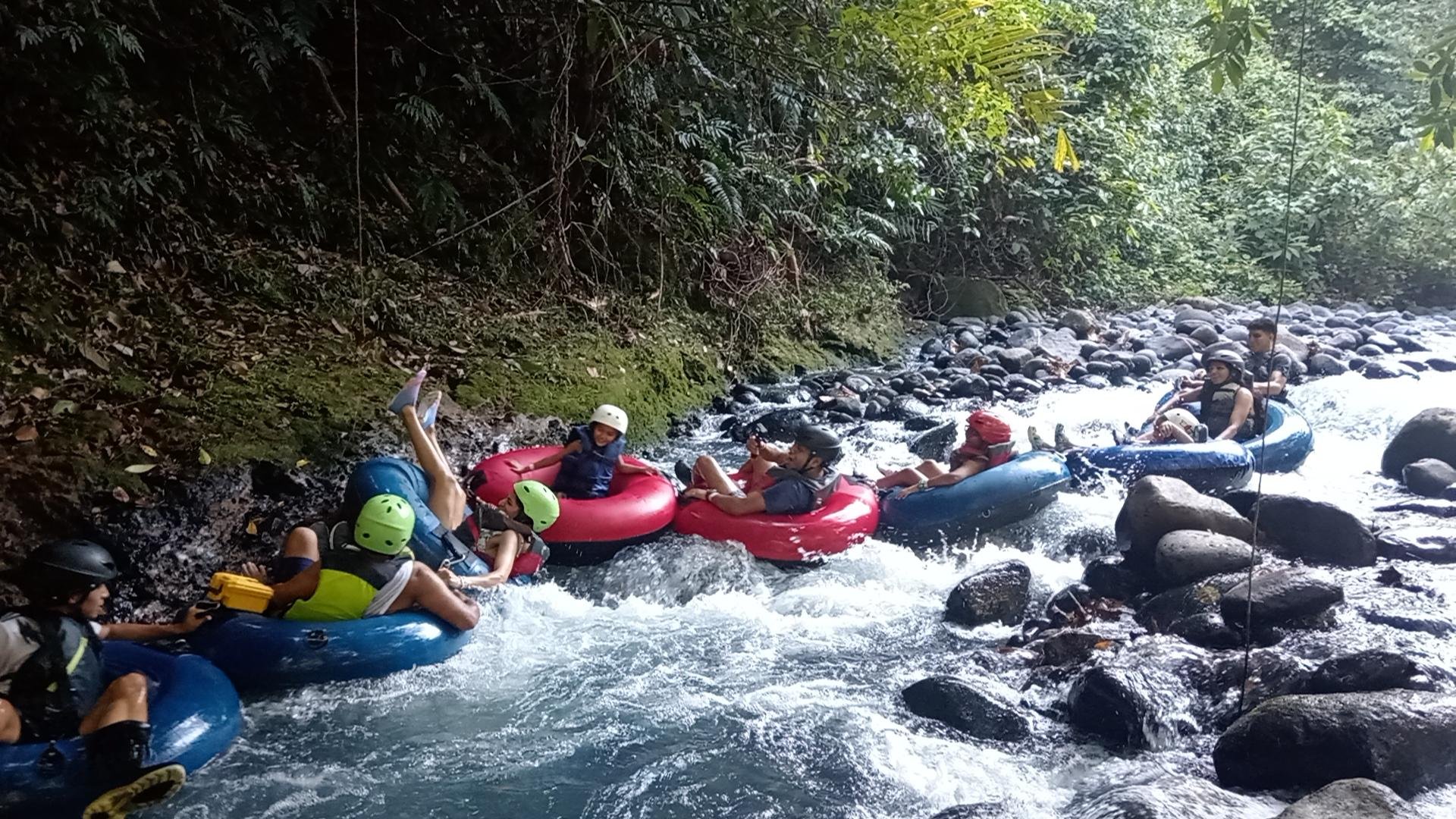
Navigate exciting rapids through pristine rainforest on an adrenaline-filled river tubing experience
2 hours
Free Cancellation
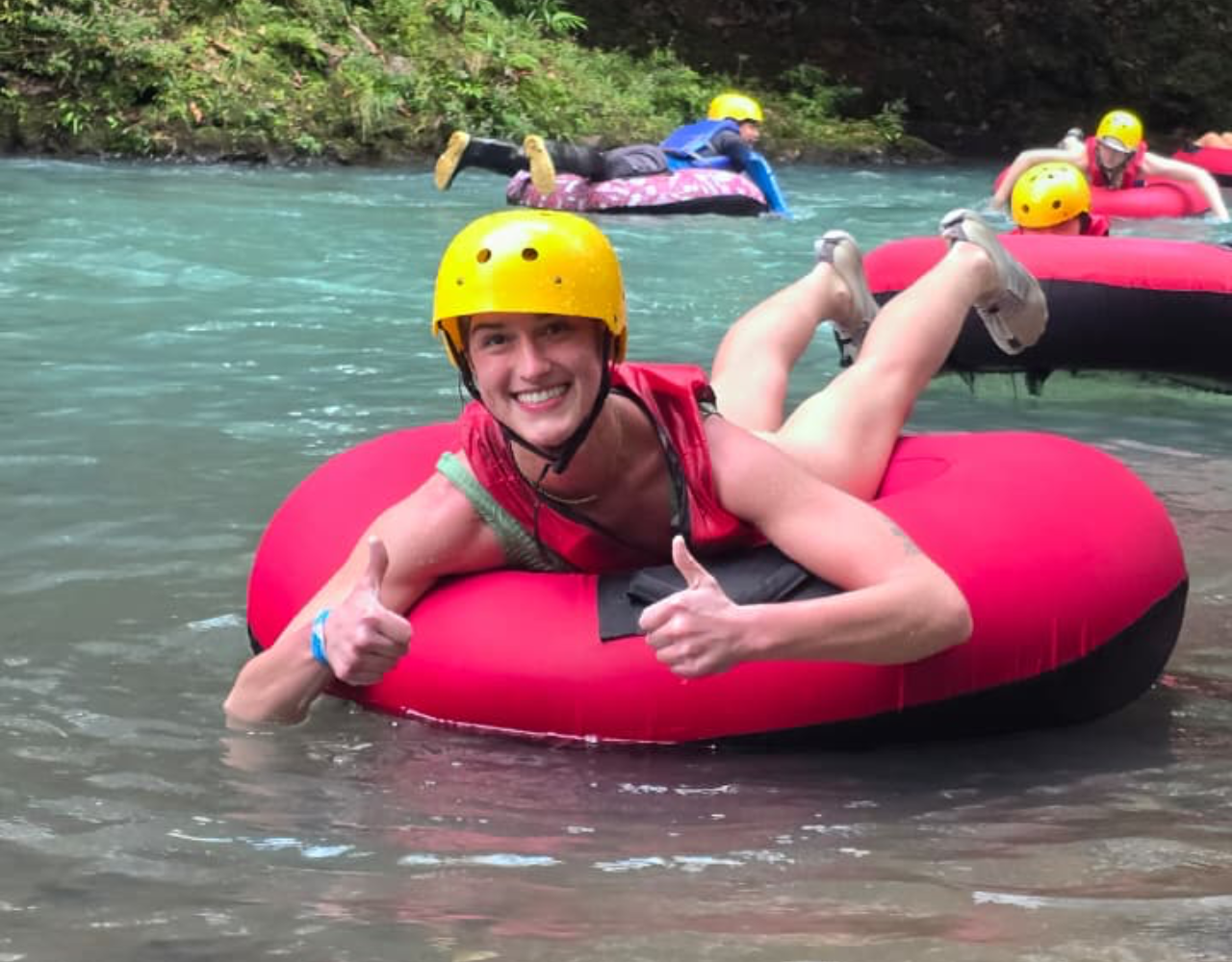
Float through vibrant turquoise waters on a small-group tubing journey led by passionate local hosts
9 hours
Free Cancellation
Full-day nature adventure featuring Rio Celeste's turquoise waters, sloth spotting, and authentic coffee tasting
3 hours
Free Cancellation
Trek through cloud forest to witness the mystical turquoise waters of Rio Celeste and its stunning waterfall
7 hours
Free Cancellation
Trek through tropical jungle to witness a stunning turquoise waterfall and soak in natural hot springs
6 hours
Free Cancellation
Discover Costa Rica's legendary turquoise waterfall in comfort with expert guidance and premium transport.
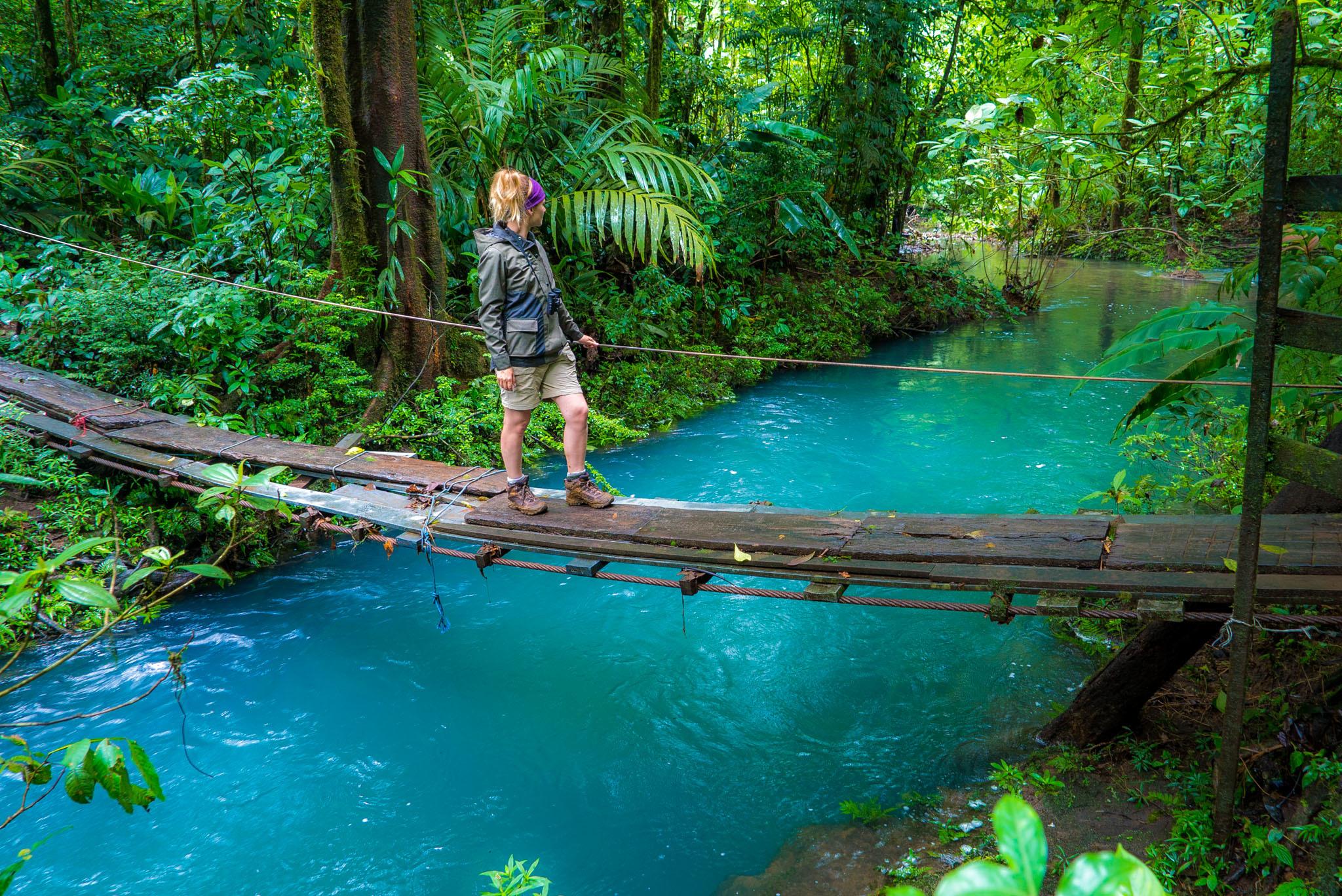
You arrive at the Bijagua ranger station before the midday heat settles. The trail descends immediately into secondary rainforest — the canopy closes overhead within fifty meters. Boardwalks cross seeps where poison dart frogs call. At kilometer 1.2, you reach Los Teñideros.
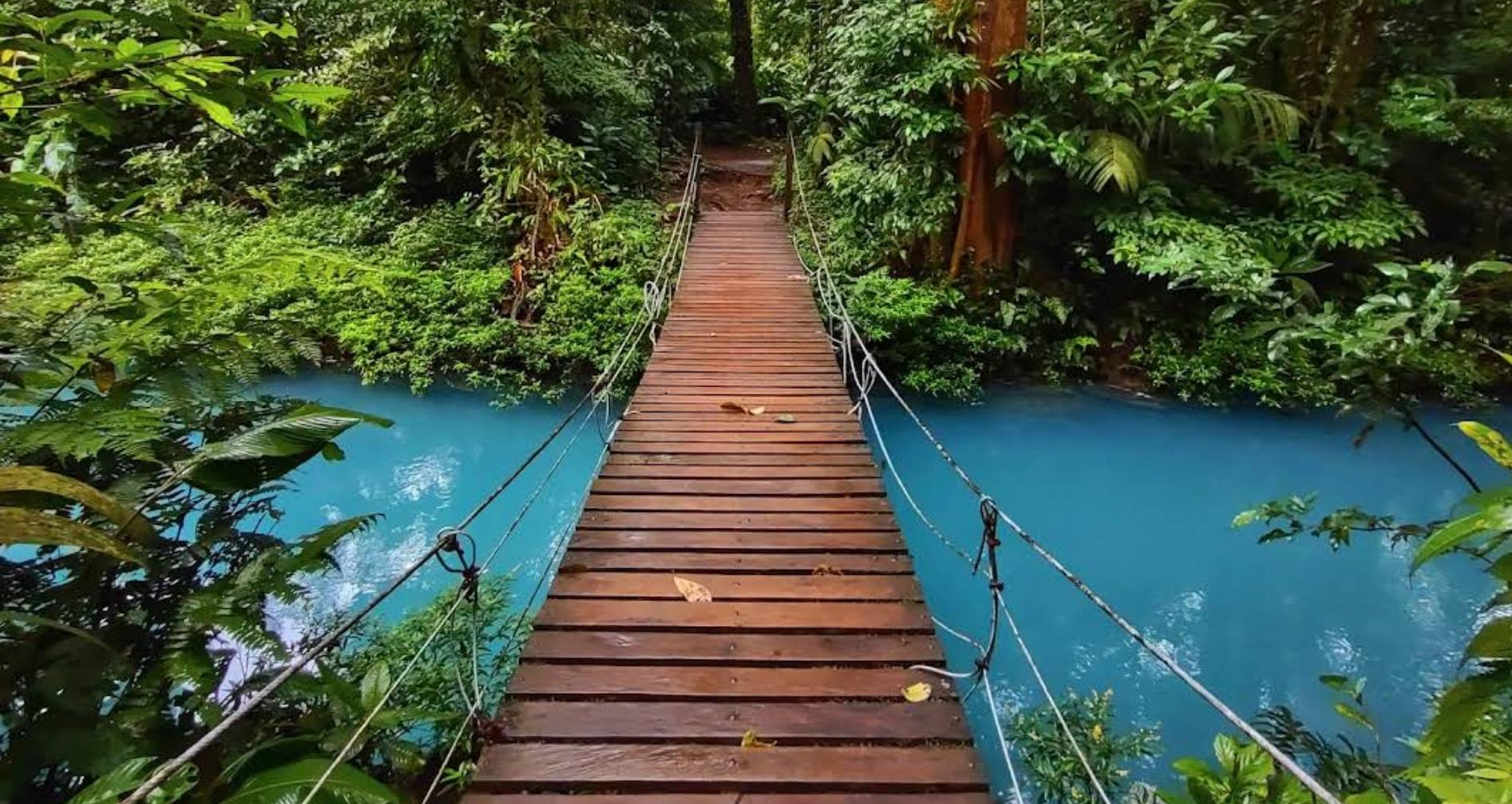
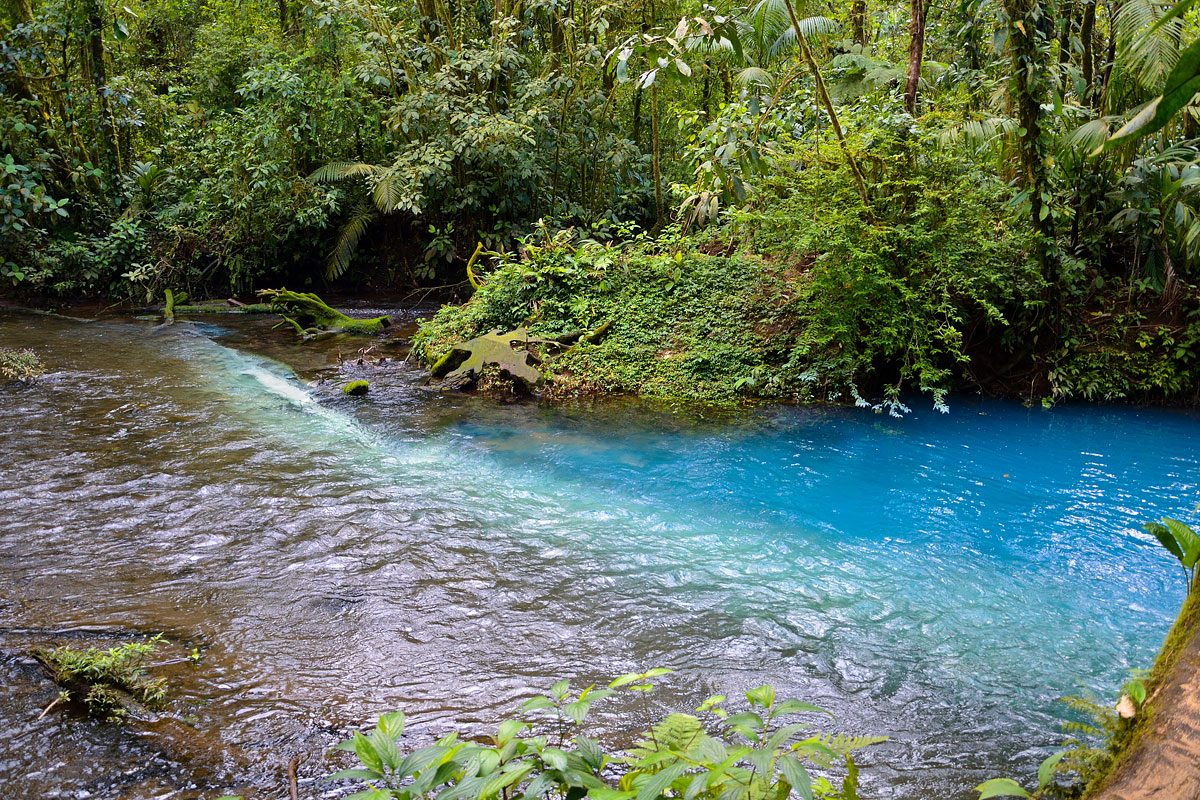
Two streams meet in a shallow pool, one clear, one milky. Ten meters downstream the water turns opaque blue.
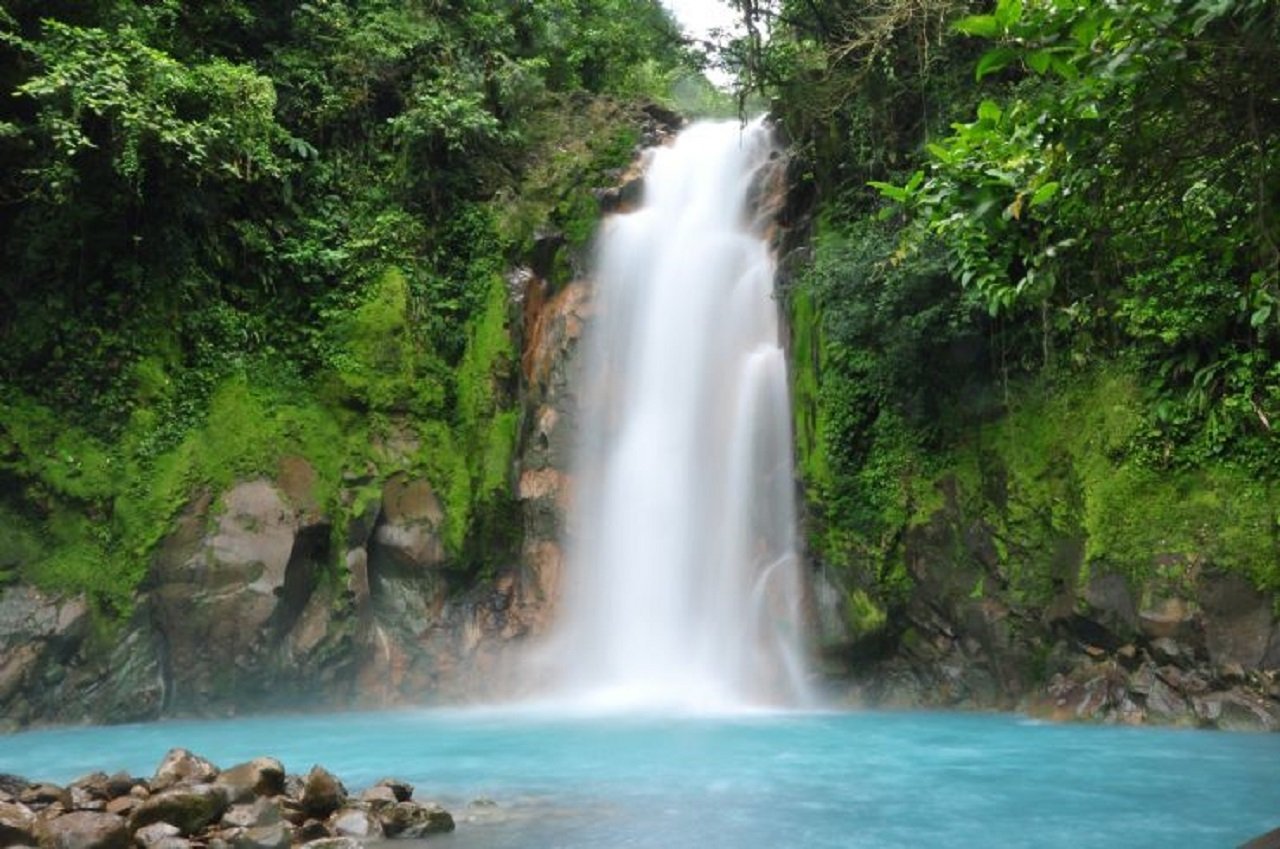
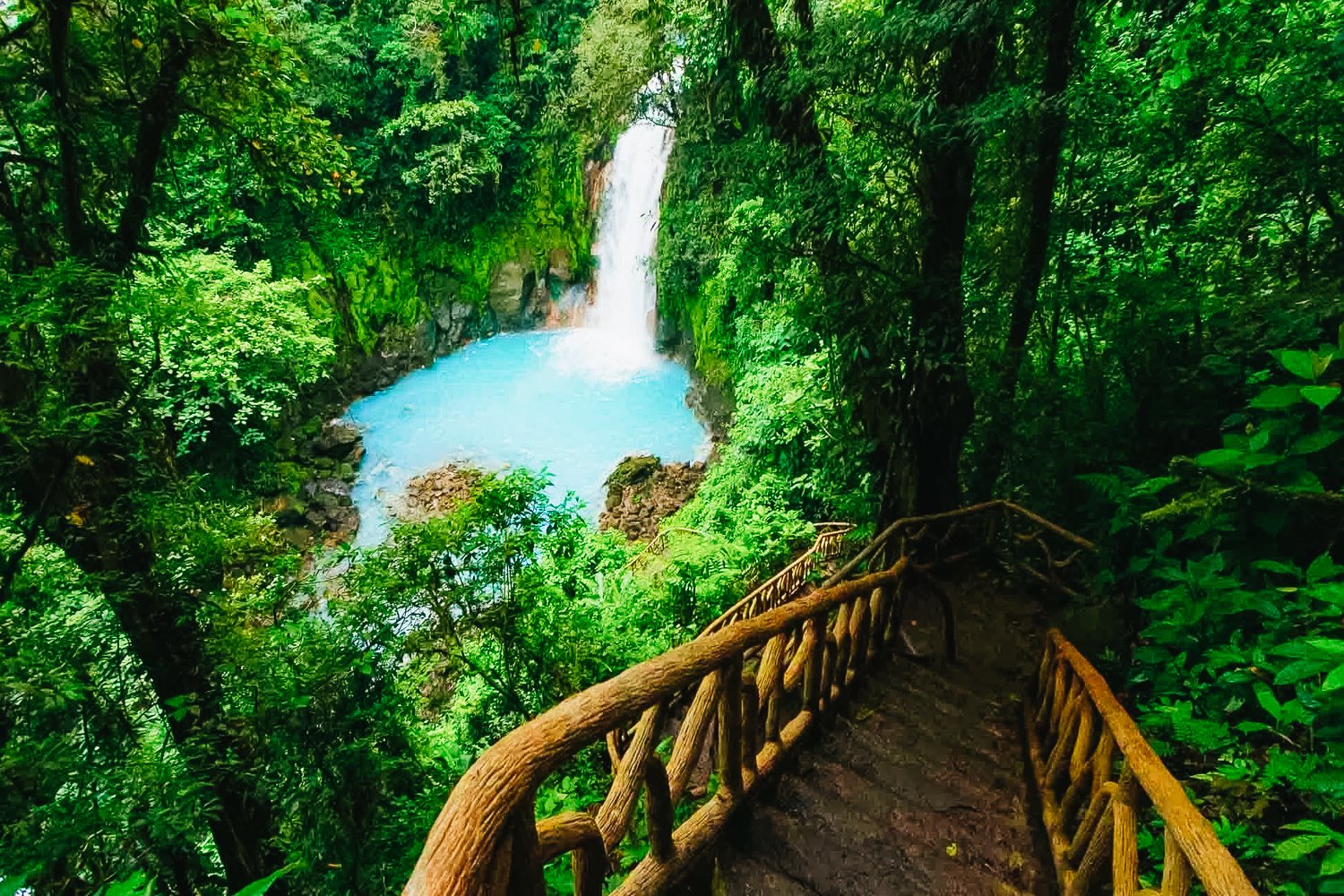
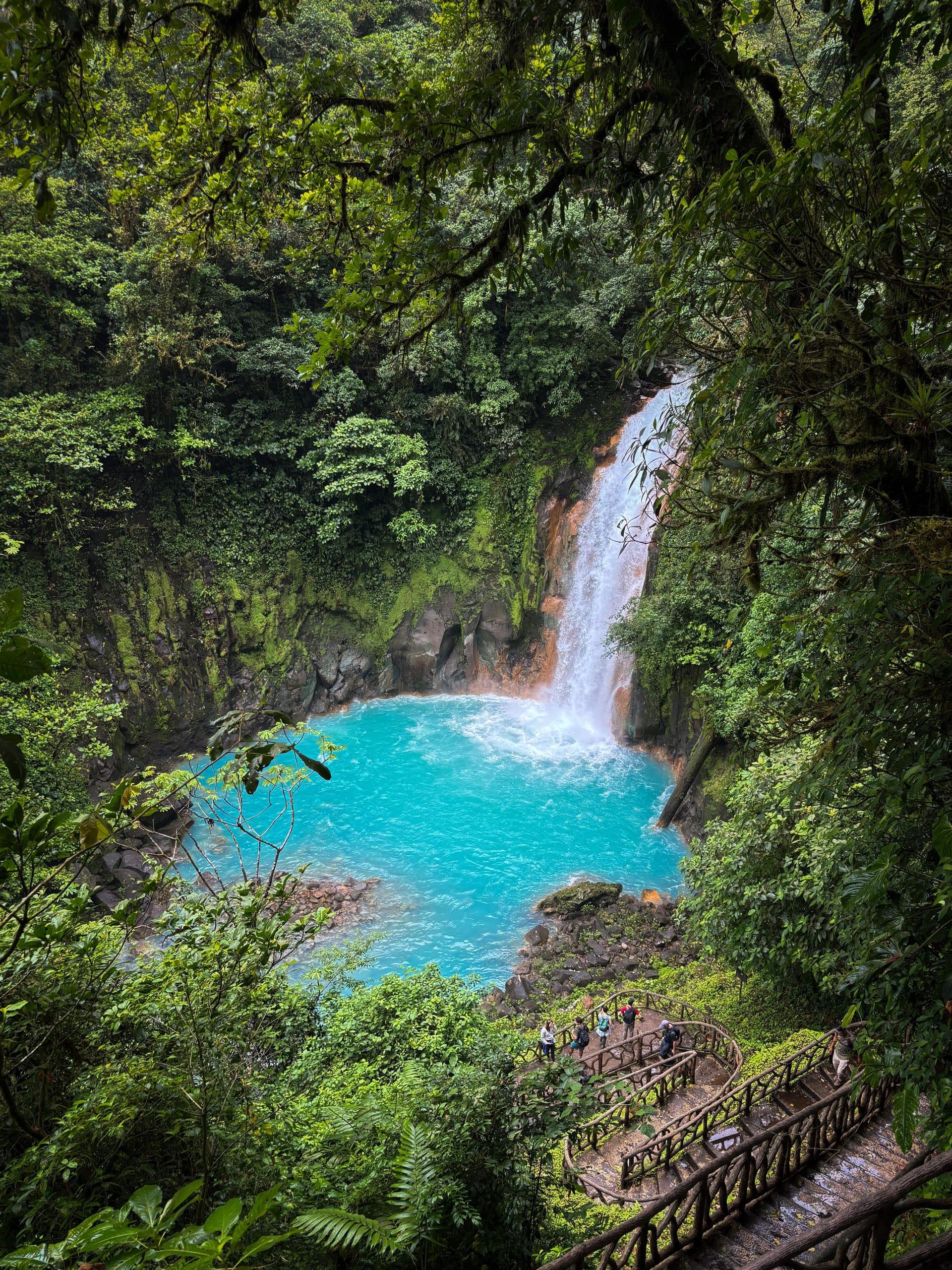
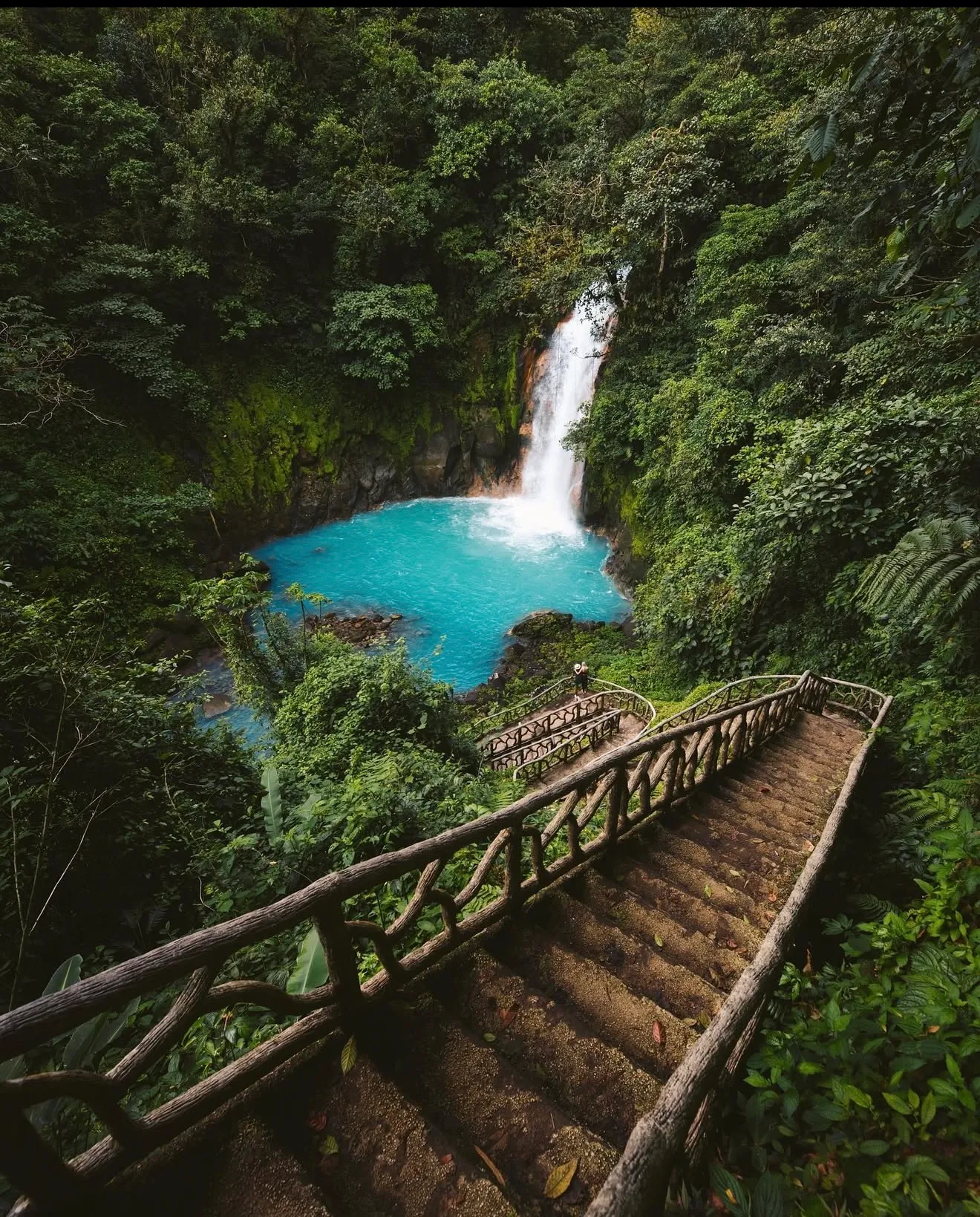
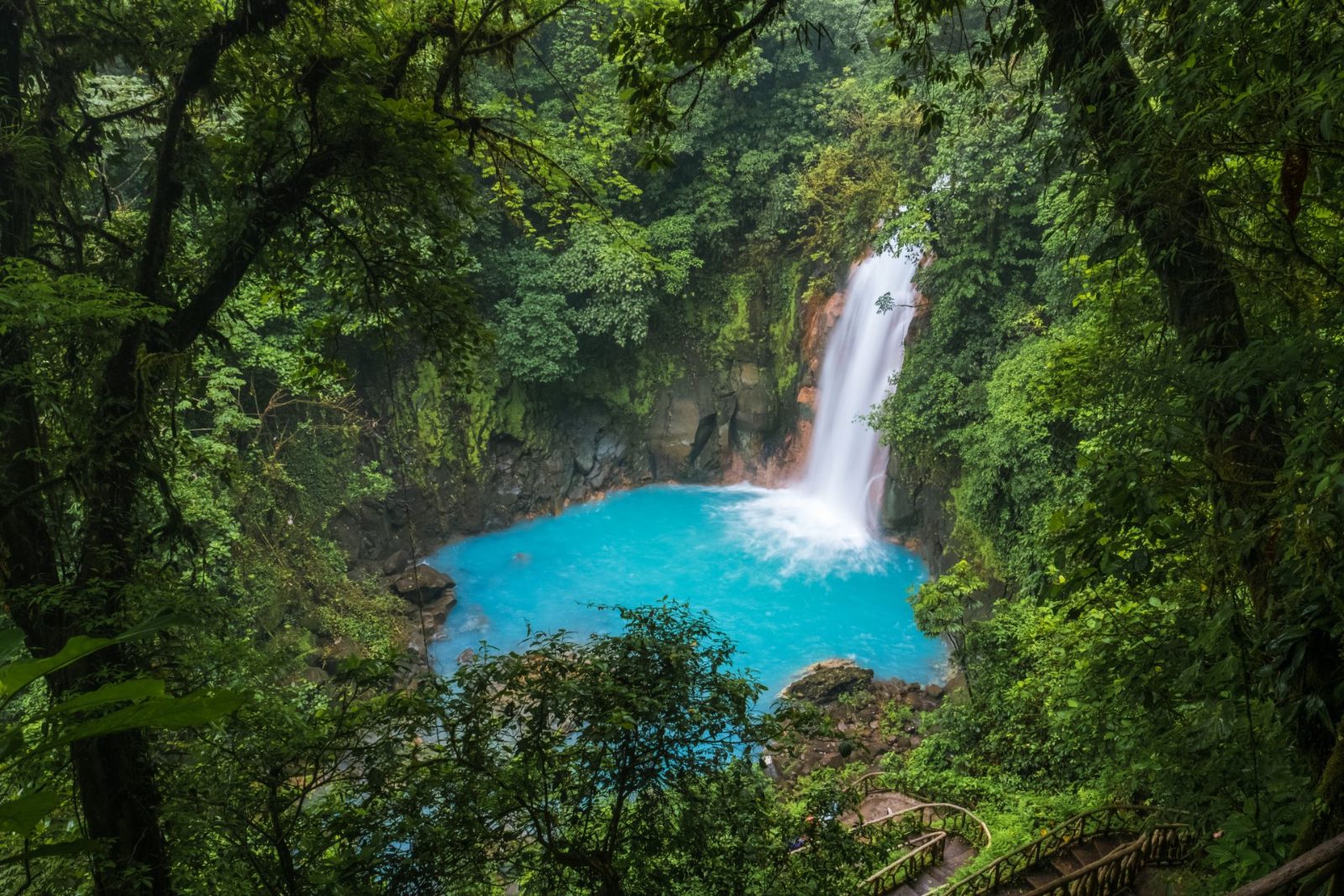
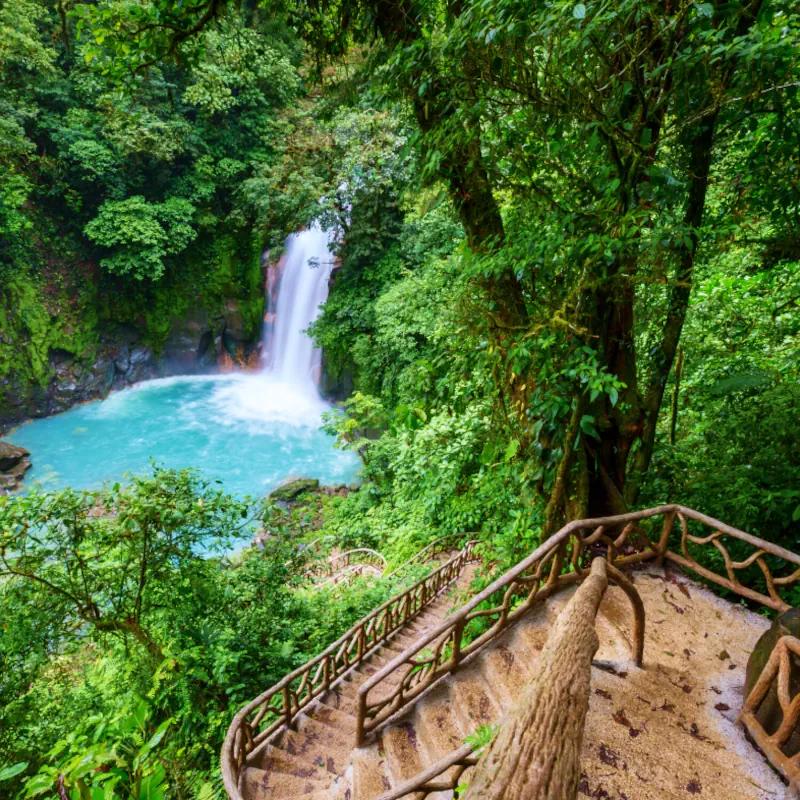
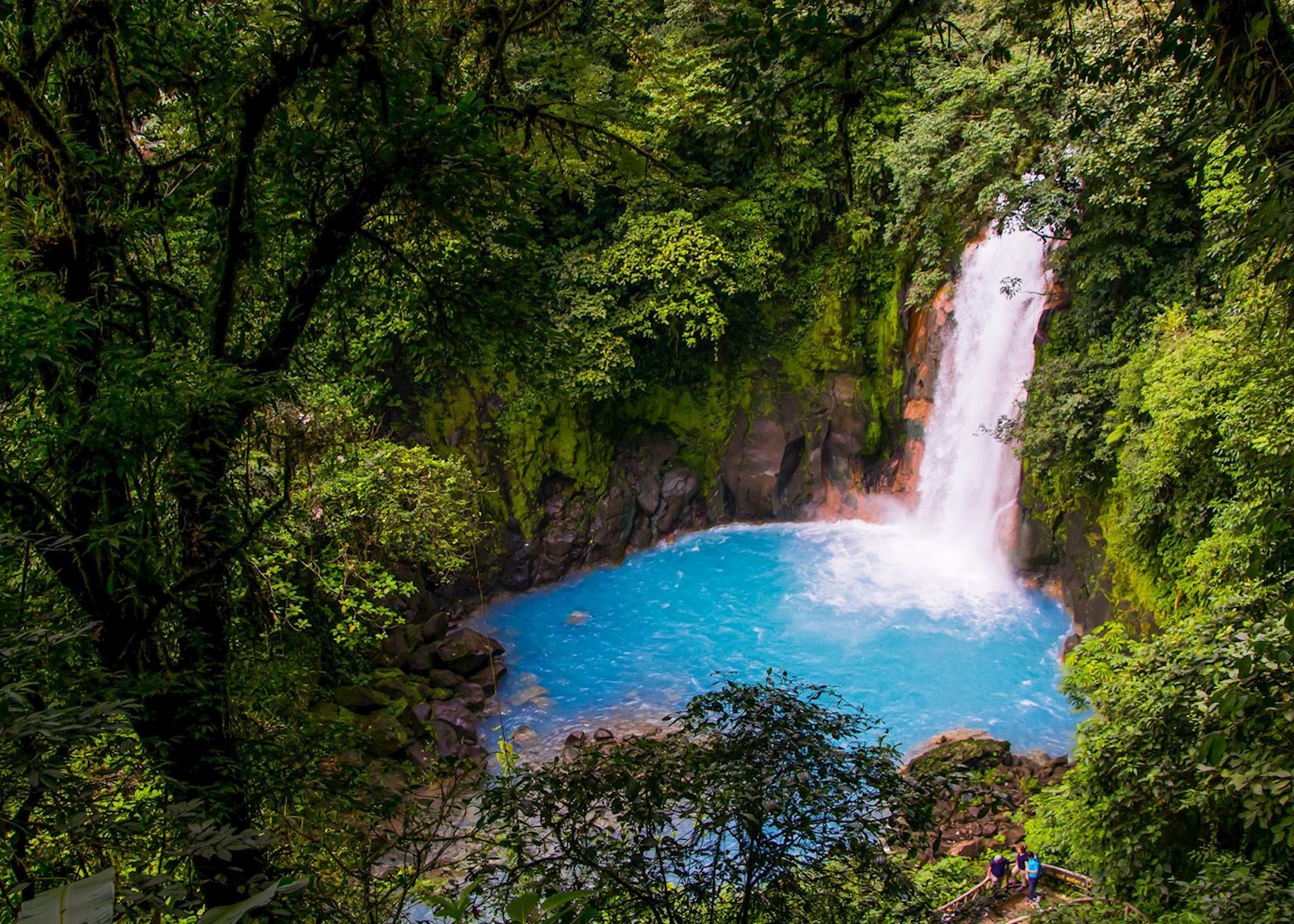
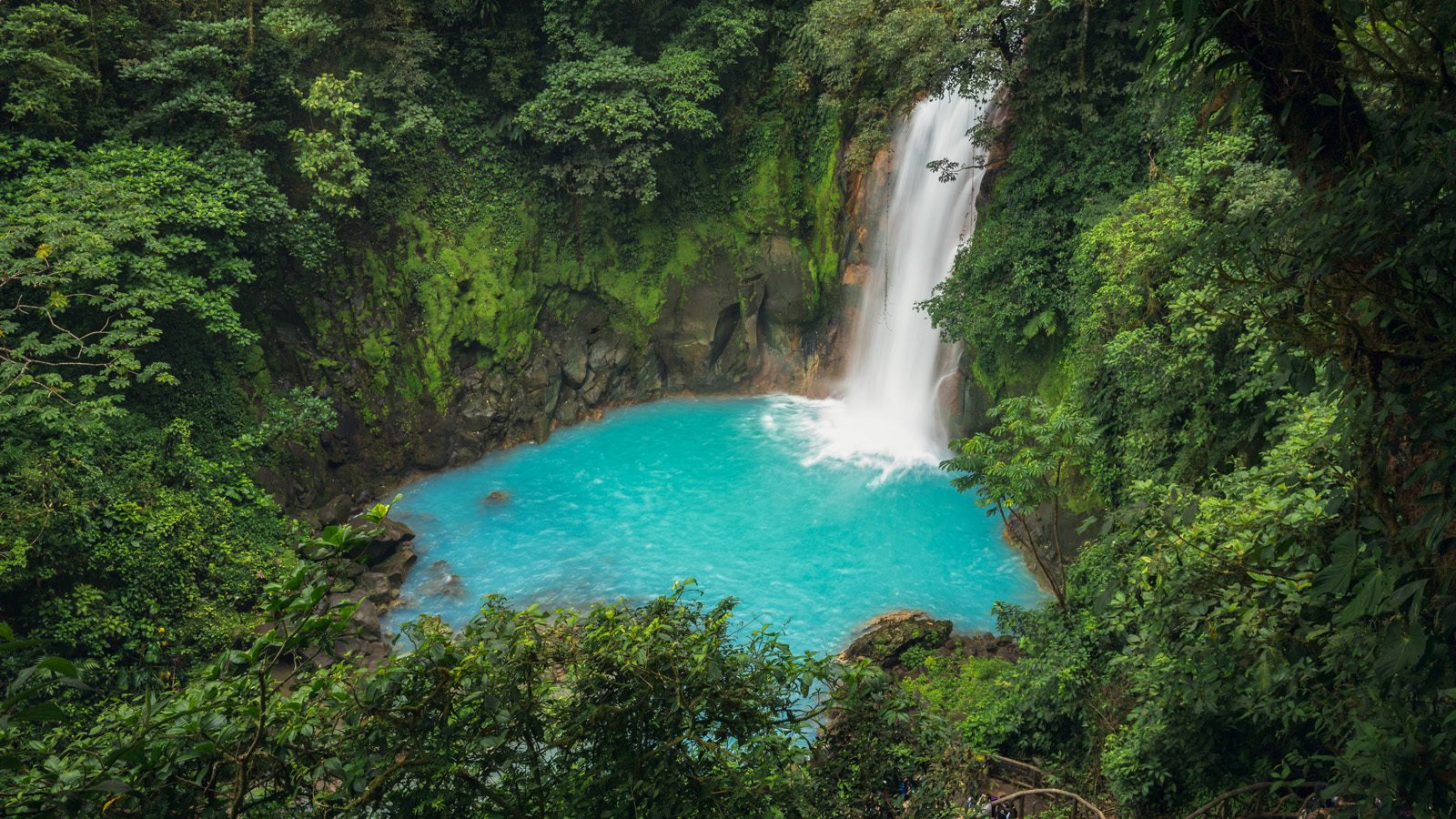
The main trail continues through stands of gavilán trees and wild ginger. You pass the lagoon viewpoint — a still oxbow reflecting the canopy — then begin the descent. The roar of the waterfall builds. At the overlook platform, 254 steps down from the trailhead, the full cascade appears. The plunge pool churns turquoise foam against black basalt.
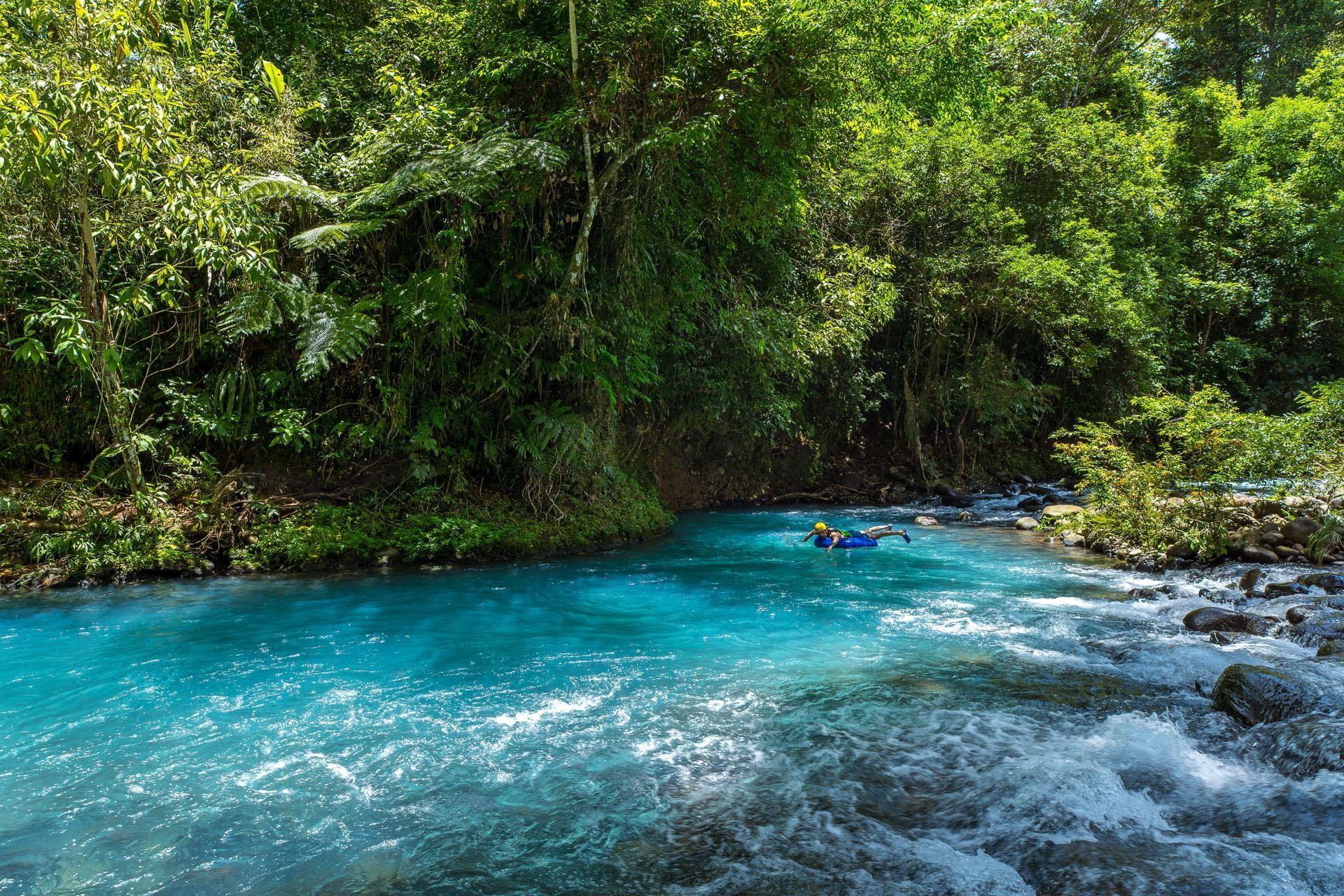
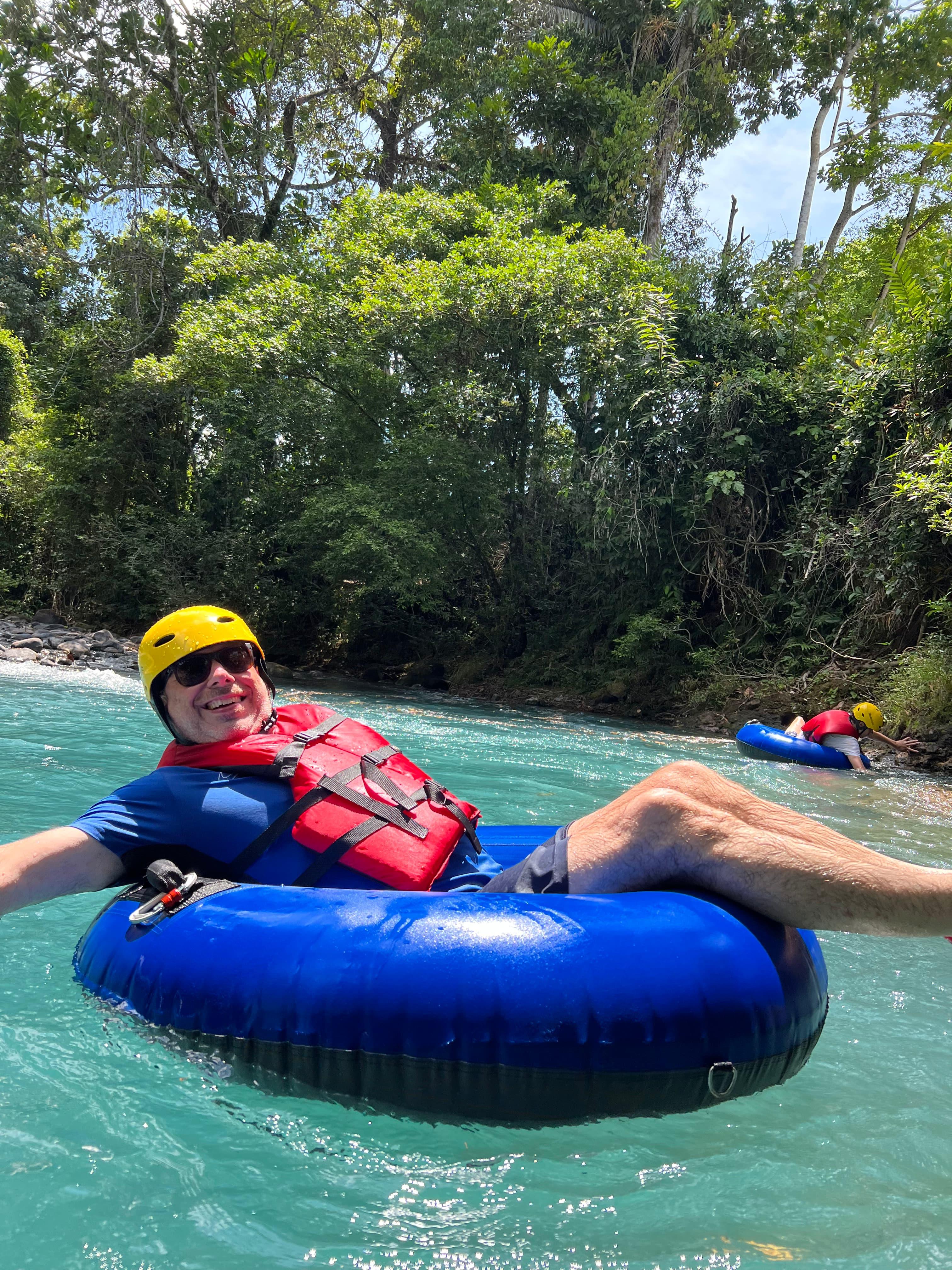
You cannot swim here. The current is too strong, and the park prohibits entry to protect the riverbed. Instead, you watch the mist rise and photograph the contrast between the electric water and the dark rock. The return climb takes thirty minutes. If you have booked a tubing add-on, a separate operator shuttles you to a calmer section downstream, outside the park boundary, where you float through forest corridors on inflatable rings. The water stays blue for three more kilometers before it drains into the San Carlos plain and the color fades.
All the details about your upcoming adventure in one place
The electric cerulean that gives Río Celeste its name does not come from a filter or myth. Two mineral-rich streams meet at a junction called Los Teñideros — one carrying aluminum silicate particles from Tenorio Volcano's slopes, the other aluminosilicate compounds in suspension.
When they converge, the particles clump and scatter sunlight at wavelengths the human eye reads as turquoise. The phenomenon was decoded by University of Costa Rica chemists in 2013, but the Maleku people knew the river as a sacred boundary centuries before.
Today, Tenorio Volcano National Park protects 12,871 hectares of lower montane rainforest, cloud forest, and volcanic slopes between 600 and 1,916 meters elevation. The waterfall itself drops 30 meters over a basalt ledge, and the trail system extends 6 kilometers roundtrip through corridors of heliconias, tree ferns, and bromeliads. Access is limited to preserve the fragile riparian corridor. The park opened to the public in 1995, and visitation remains capped by daily entry quotas enforced at the Bijagua ranger station.
The geology is young. Tenorio is part of the Guanacaste Volcanic Arc, a chain of stratovolcanoes built over the last two million years as the Cocos Plate subducts beneath the Caribbean Plate. The most recent recorded eruption was in 1816, though fumaroles and hot springs still vent along the volcano's western flank. The river's color shifts with rainfall — heavier flow dilutes the mineral load, turning the water jade or slate depending on sediment concentration. Morning light renders the brightest hue.
Conservation challenges include illegal logging in buffer zones and unregulated tour pressure on the main trail. SINAC, Costa Rica's national park authority, enforces a strict 08:00–14:00 window to reduce crowding and protect the watershed. The $12 foreign-visitor conservation fee funds trail maintenance, reforestation work, and ranger patrols. No swimming is permitted at the waterfall itself, though tubing is allowed on calmer downstream sections outside the core protection zone. The park recorded 87,000 visitors in 2025, a deliberate ceiling set to prevent trail erosion and disturbance to resident wildlife including jaguars, tapirs, and three-wattled bellbirds.

When they converge, the particles clump and scatter sunlight at wavelengths the human eye reads as turquoise.
Wear sturdy, closed-toe hiking shoes as the terrain can be muddy and uneven. Lightweight, moisture-wicking clothing is recommended for the humid rainforest environment.
Security personnel at the ranger station may inspect bags upon entry. Keep valuables secure or in your vehicle as storage lockers are not provided.
Photography is permitted for personal use without a flash. Tripods are generally not allowed on narrow trail sections to prevent blocking path access for other hikers.
Children are welcome, though the hike is physically demanding for toddlers. Use a sturdy baby carrier as strollers are strictly prohibited on the forest trails.
The trail is not wheelchair accessible due to steep gradients and uneven natural terrain. Access involves 254 steps to reach the primary observation area.
Bring only refillable water bottles and light snacks to avoid littering. Consumption is limited to designated rest areas to maintain park cleanliness.
Best arrival window
08:00–14:00
Address
Bijagua, Upala, Guanacaste, Costa Rica
Step count (access)
254
Peak hours
10:30–12:30
Storage
Not available inside
Official site
https://www.sinac.go.cr
Tickets for Tenorio Volcano National Park are non-refundable once purchased. Changes or cancellations must be handled directly through the official SINAC system.
Recommended time
3 hours
Most visitors spend approximately three hours exploring the Tenorio Volcano National Park trails and observing the turquoise river. Securing rio celeste waterfall tickets ahead of time allows for a smoother entry process during the optimal window of 08:00–14:00. Those opting for rio celeste waterfall tickets tours often find that arriving at opening time helps avoid the heaviest congestion on the main hiking paths. If you prefer a more solitary trek through the tropical rainforest to view the volcanic activity, plan for a morning arrival before the visitor capacity limit is reached.
Crowd levels through the day
The celestial blue waters of Río Celeste remained largely unknown beyond local indigenous communities until the mid-twentieth century. The Maleku people, who inhabited the region for centuries, regarded the river as sacred and attributed its turquoise hue to divine intervention. Scientific interest emerged in the 1970s when geologists studying Tenorio Volcano documented the unusual coloration. They discovered that the phenomenon results from an optical illusion: suspended aluminosilicate particles scatter sunlight at specific wavelengths where two clear streams—Río Buenavista and Quebrada Agria—merge. The waterfall itself plunges twenty-eight meters into a cobalt pool, fed by geothermal springs heated by the volcano's residual activity. Formal protection came in 1995 when Costa Rica designated 18,400 acres as Tenorio Volcano National Park. Early rio celeste waterfall tickets were rudimentary paper permits issued at a ranger station in Bijagua. Infrastructure development accelerated after 2008, when the Sistema Nacional de Áreas de Conservación constructed the current trail system and installed the 254-step staircase descending to the waterfall viewpoint. A 2012 landslide temporarily closed access for six months, prompting engineers to reinforce the trail with volcanic rock retaining walls. By 2015, annual visitation exceeded fifty thousand, straining the fragile riparian ecosystem. Conservation pressures led to strict capacity limits in 2018. The park now caps daily entries at two hundred visitors, with rio celeste waterfall tickets tours typically departing before noon to ensure admission. A 2021 study by the University of Costa Rica confirmed that suspended mineral particles—not chemical dyes or algae—create the signature color, settling a decades-long scientific debate. The research documented how volcanic minerals from ancient lava flows, combined with precise pH levels and particle size distribution, produce the river's unmistakable azure. Modern access balances preservation with tourism: reinforced boardwalks protect riverbanks, while the early closure time at 14:00 prevents trail erosion during afternoon rains.
Stand at the end of the 254 stairs to capture the iconic view of the turquoise cascade plunging into the pool. This primary perspective is essential for those who purchased rio celeste waterfall tickets.
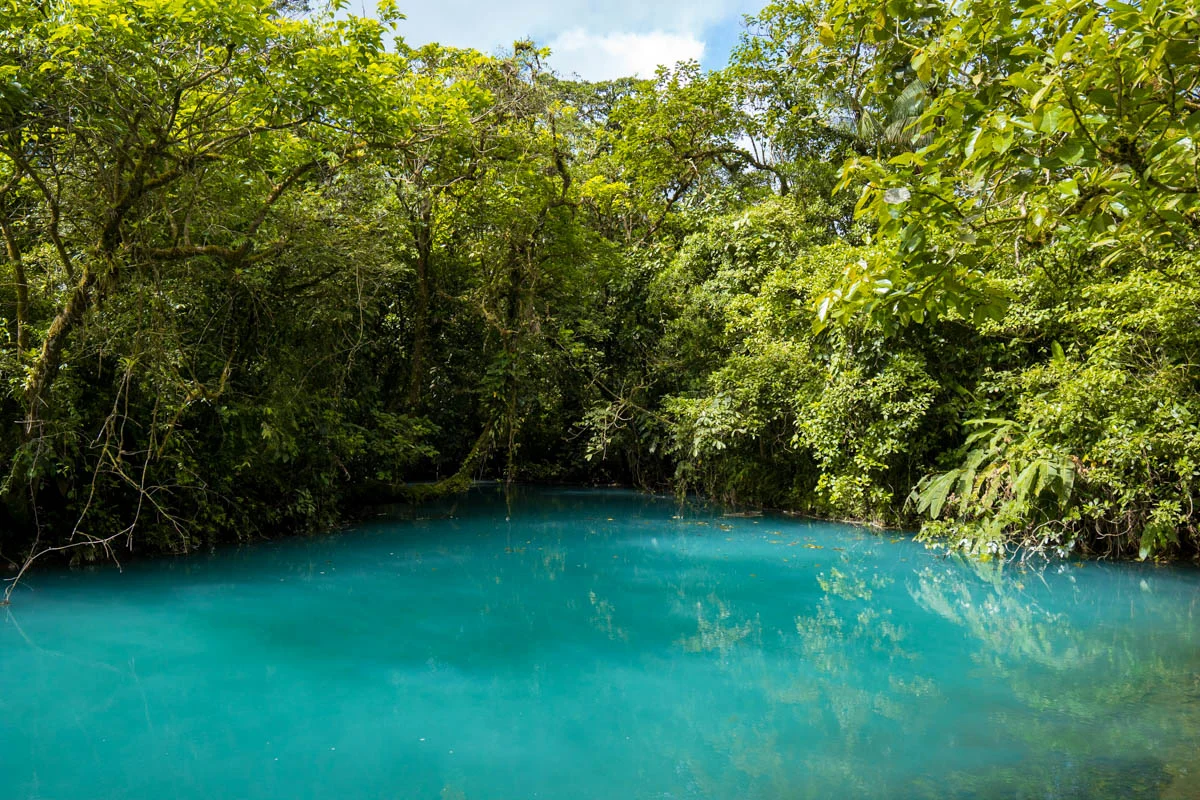
Located along the main trail, this tranquil basin showcases the vivid mineral-rich coloration of the water. Capture the reflection of the surrounding rainforest canopy against the vibrant blue surface.
Follow the trail to the spot where two transparent streams merge to create the unique water chemistry of the river. This location offers a scientific perspective on the natural phenomena within Tenorio Volcano National Park.
This stretch provides opportunities to photograph the dense tropical foliage and diverse flora found on the path to the waterfall. Many guests utilize rio celeste waterfall tickets tours to better identify the local biodiversity.
Planning a family outing requires careful preparation when securing your rio celeste waterfall tickets to explore the trails of Tenorio Volcano National Park. This nature adventure involves navigating rugged terrain and a significant staircase to reach the iconic turquoise pool.
The trail is unsuitable for strollers or wheelchairs due to uneven terrain and 254 steps leading to the main attraction
This hike is best suited for school-aged children and teenagers who can manage the physical demands of the rainforest path
There are no baby-change facilities or specialized amenities located within the park, so please plan your personal logistics accordingly
Families should arrive during the best arrival window of 08:00–14:00 to navigate the trek at a comfortable speed without rushing to meet the daily capacity limit
Visitors must consume meals outside the park boundaries as no food is permitted on the trails, making it essential to coordinate your rio celeste waterfall tickets tours around snack times elsewhere.
The trail becomes muddy and slippery during rainfall, so families seeking to use their rio celeste waterfall tickets tickets should check weather conditions beforehand to ensure safe footing.
Visitors seeking rio celeste waterfall tickets will find no dining facilities inside Tenorio Volcano National Park, so most travelers head to the nearby village of Bijagua for local meals. Dining options are concentrated along the main road leading to the park entrance, providing convenient spots to refuel after finishing the 254 steps.
This local eatery offers generous plates of casado and fresh fruit juices. It is a popular stop for those completing rio celeste waterfall tickets tours who want an authentic taste of Guanacaste.
Located on the route to the park, this spot serves hearty Costa Rican cuisine in a rustic setting. It is ideal for a post-hike lunch, especially if you have booked a rio celeste waterfall tickets tour that concludes in the early afternoon.
A straightforward roadside establishment perfect for a quick, affordable meal before or after park activities. Visitors often grab a coffee and a snack here while securing rio celeste waterfall tickets tickets for the following day.
Everything you need to know for your journey
Tenorio Volcano National Park is open daily from 08:00–14:00. The park allows visitors to remain on-site until 16:00.
The entrance fee for Tenorio Volcano National Park is 12 USD per foreign adult. This conservation fee supports park operations.
Accessing the waterfall requires navigating 254 steps. Ensure you are prepared for a strenuous climb back up.
There are no formal skip-the-line passes for rio celeste waterfall tickets. Arrive during the recommended window to ensure entry.
Visitors are permitted to bring light snacks and water in reusable containers. Please carry out all waste to keep the park pristine.
Parking is available near the entrance for a separate fee, typically paid to local operators. It is not part of the conservation fee.
For rio celeste waterfall tickets, the best arrival window is 08:00–14:00. Arriving early helps avoid crowds and ensures you meet capacity limits.
Families with children are welcome at Tenorio Volcano National Park. Note that strollers cannot be used on the trails.
Swimming is strictly prohibited inside Tenorio Volcano National Park to protect the ecosystem. This applies to the waterfall and all park rivers.
Join thousands of happy travelers who have discovered this incredible experience
Book Your Experience Now